
For buyers prioritizing documented impact resistance, scratch protection, and a glass-like surface, tempered glass is the stronger sourcing choice. A soft protector should be selected only when its supplier can demonstrate that it better meets the intended device, installation, or market requirements. The key is not material labeling alone: compare test evidence, fit accuracy, installation behavior, and commercial terms before placing an order.
Use These Criteria to Make the Buying Decision
- Protection evidence: Request material, hardness, impact, and surface-wear test details rather than relying on terms such as “premium” or “anti-drop.”
- Device fit: Confirm coverage, border design, case compatibility, and the exact model list.
- Installation consistency: Evaluate adhesive behavior, bubble evacuation, edge lifting, and dust control on production samples.
- Commercial readiness: Match the minimum order quantity and lead time to the launch plan and inventory risk.
These checks are especially important when comparing tempered glass with soft film because the two offers may not be supported by equivalent test methods. Buyers should require comparable samples and acceptance criteria before deciding that one material is better for every model.
What Protection Evidence Should Procurement Confirm?
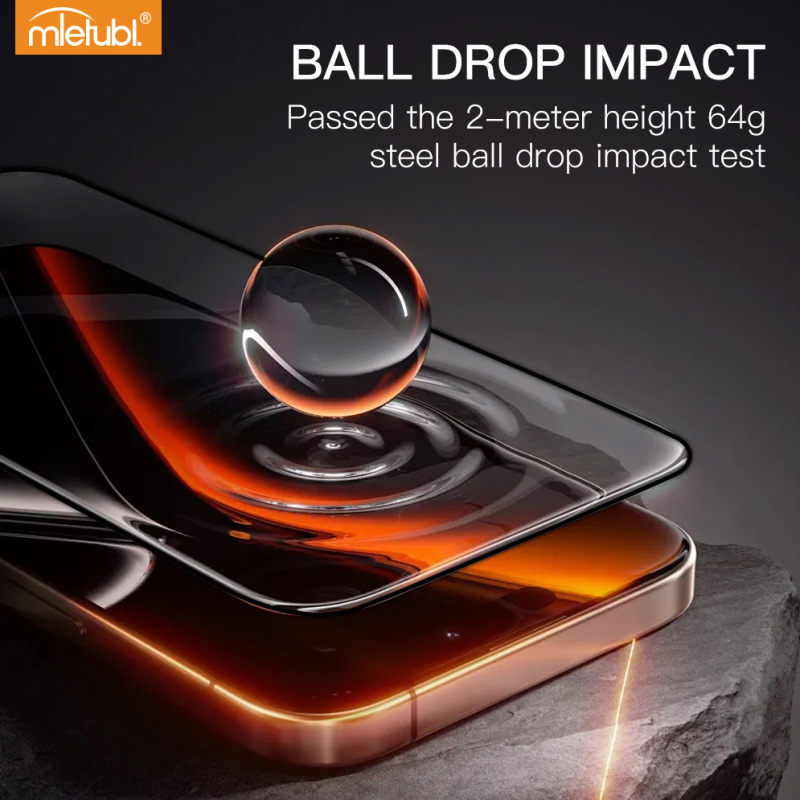
The Xuanjia impact-resistant protector provides a useful example of measurable glass specifications. Its documented construction uses 0.4 mm double-strength high-alumina glass with a Mohs hardness rating of 6. The product information also states that it passed an impact test involving a 64 g steel ball dropped from a height of 2 meters.
These figures give buyers a starting point, not a substitute for due diligence. Ask whether the quoted results apply to every requested phone model, whether testing covers finished protectors rather than raw glass, and what sampling procedure will be used for mass production. For a soft-film alternative, request equivalent evidence tied to its intended protection function. Without comparable data, a broad material-to-material conclusion would be unreliable.
How Should Buyers Assess Surface Durability?
Surface treatment affects perceived quality after installation. The Xuanjia protector uses an electroplated oleophobic coating reported to withstand more than 10,000 machine-abrasion cycles. A procurement team should confirm the test setup, pass criteria, and whether the coating result remains consistent across production batches.
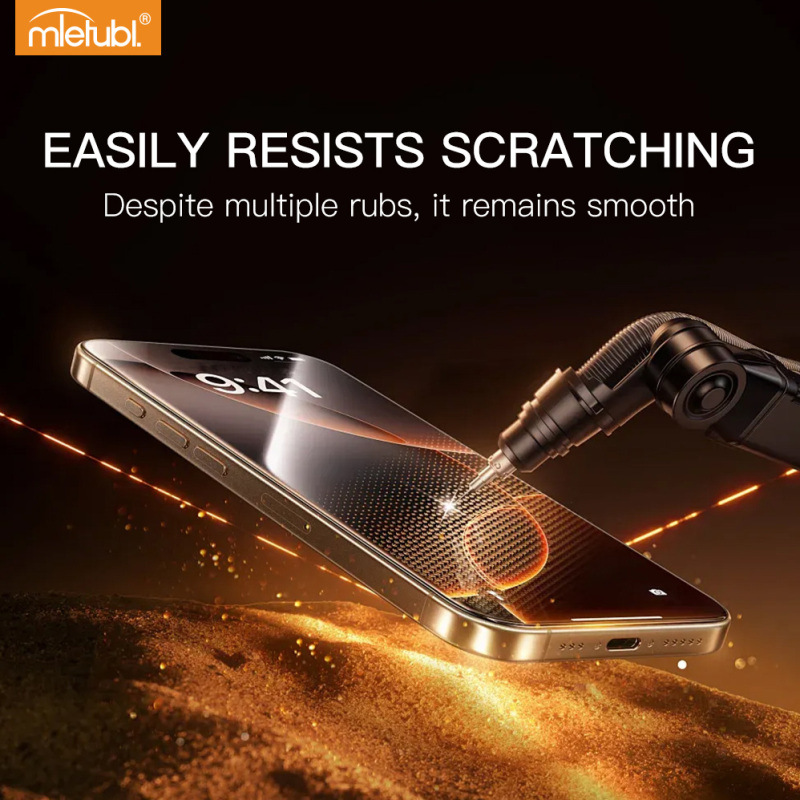
Sample evaluation should also reflect the target sales channel. Distributors may test touch feel, fingerprint residue, cleaning behavior, and visible scratching under repeat handling. These checks can reveal differences that are not obvious from glass thickness or hardness alone.
Which Fit and Order Risks Need Confirmation?
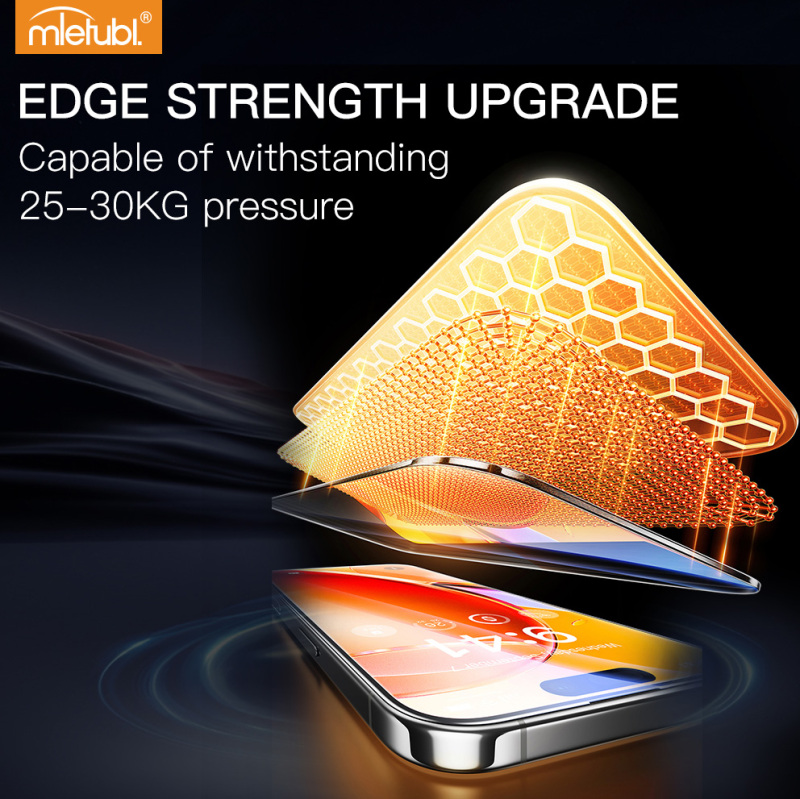
Before approval, test each priority device with the protector installed and with the cases commonly sold in that market. Confirm that the border does not cover active display areas, edges remain attached, and installation results are repeatable. Buyers should also agree on how model-specific deviations will be handled.
The stated minimum order quantity is 500 pieces, while the stated delivery time is 30 days. Confirm whether these terms apply per model, per design, or across a mixed order. Also document packaging, model allocation, pre-shipment inspection, replacement handling, and the approval process for production samples.
Common Questions
Is tempered glass always better than soft film?
No. Tempered glass is the better-supported option here for buyers seeking documented hardness and impact-test results. A soft protector may still suit a particular application, but its supplier should provide comparable evidence and samples.
What should be tested before a bulk order?
Test representative phone models for display coverage, case compatibility, edge adhesion, bubble evacuation, touch response, surface feel, and repeatable installation. Record acceptance standards before authorizing production.
Can one specification be approved for every phone model?
Buyers should not assume so. Screen geometry, borders, cases, and installation behavior can vary by model. Approval samples and model-level fit checks reduce the risk of returns or unsellable inventory.
Conclusion
Choose tempered glass when verified impact and abrasion performance are central to the buying brief, but do not purchase on the material name alone. Approve the order only after confirming test applicability, model-level fit, installation consistency, and commercial scope in writing.
About Mietubl
Mietubl is a Guangzhou-based mobile accessories brand whose name reflects its guiding idea: Make It Easier To Use, Better Life. With roots in the mobile accessories industry dating to 1998 and the MIETUBL brand registered in 2010, the company focuses on products that make everyday digital use simpler and more practical.
Its portfolio includes screen protectors, intelligent screen protector cutting machines, film materials, data cables, chargers, power banks, and audio accessories. By combining design, product development, manufacturing, and channel support, Mietubl works with distributors and retailers serving a broad range of mobile accessory needs, with products exported to more than 120 countries and regions.
For product information, samples, or distribution opportunities, contact Marketing@mietubl.com or visit www.mietubl.com.
Was this article helpful?
Your feedback helps us improve future articles.