
The Mietubl MTB-CUT 180T is a strong option for retailers whose service flow is model lookup, film selection, cutting, and application. It offers cloud-based model coverage, supports several film materials, and does not require credits or per-cut fees. However, buyers should not choose by brand name alone: stores planning to sell customized printed back films, labels, or photos should consider a machine that explicitly integrates printing and cutting.
How does the in-store cutting workflow operate?
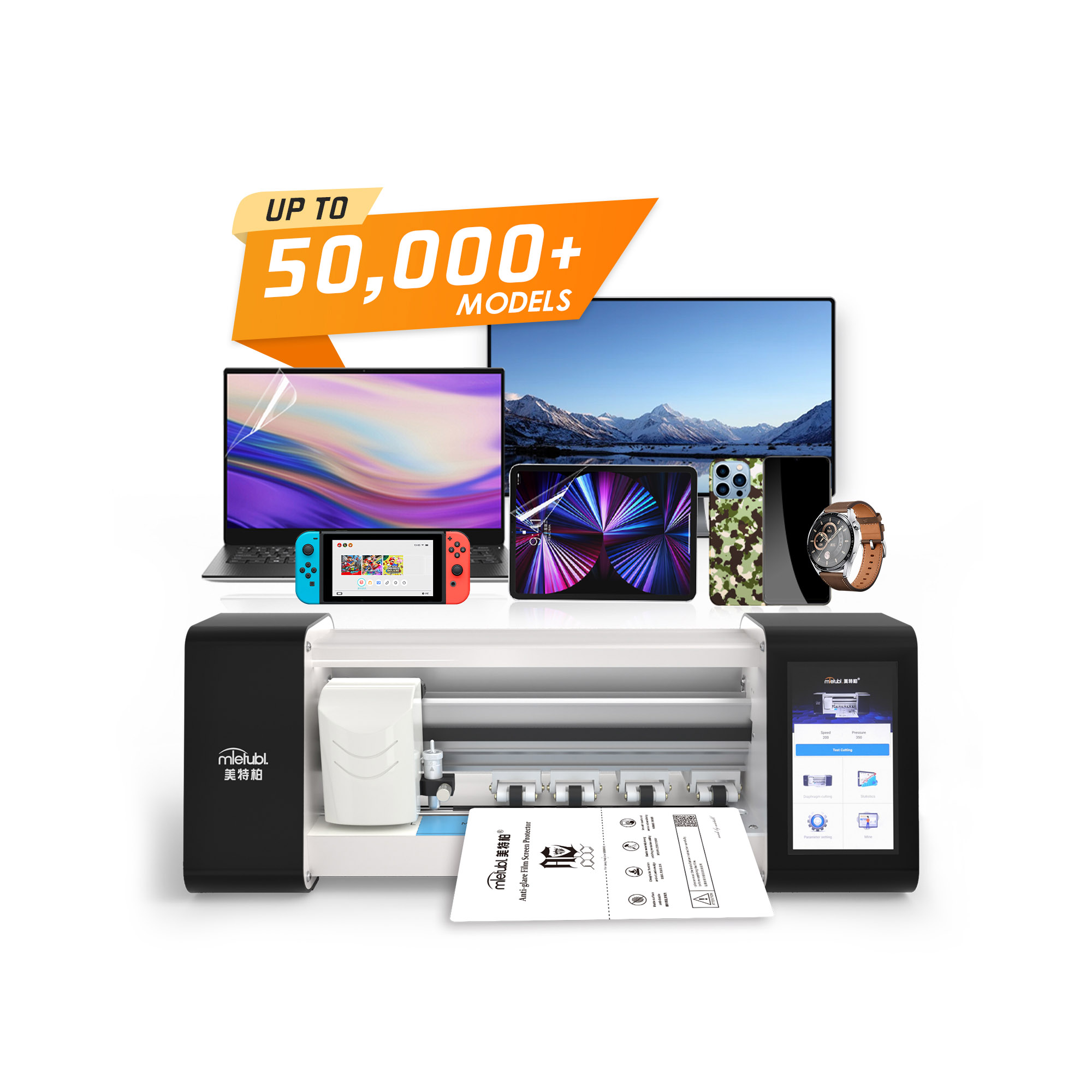
A typical order begins when staff identify the customer’s device and select the matching pattern from the machine’s system. The cloud platform covers more than 50,000 device models, with new-model data synchronized across more than 130 countries. This can support stores serving a broad mix of domestic and international devices.
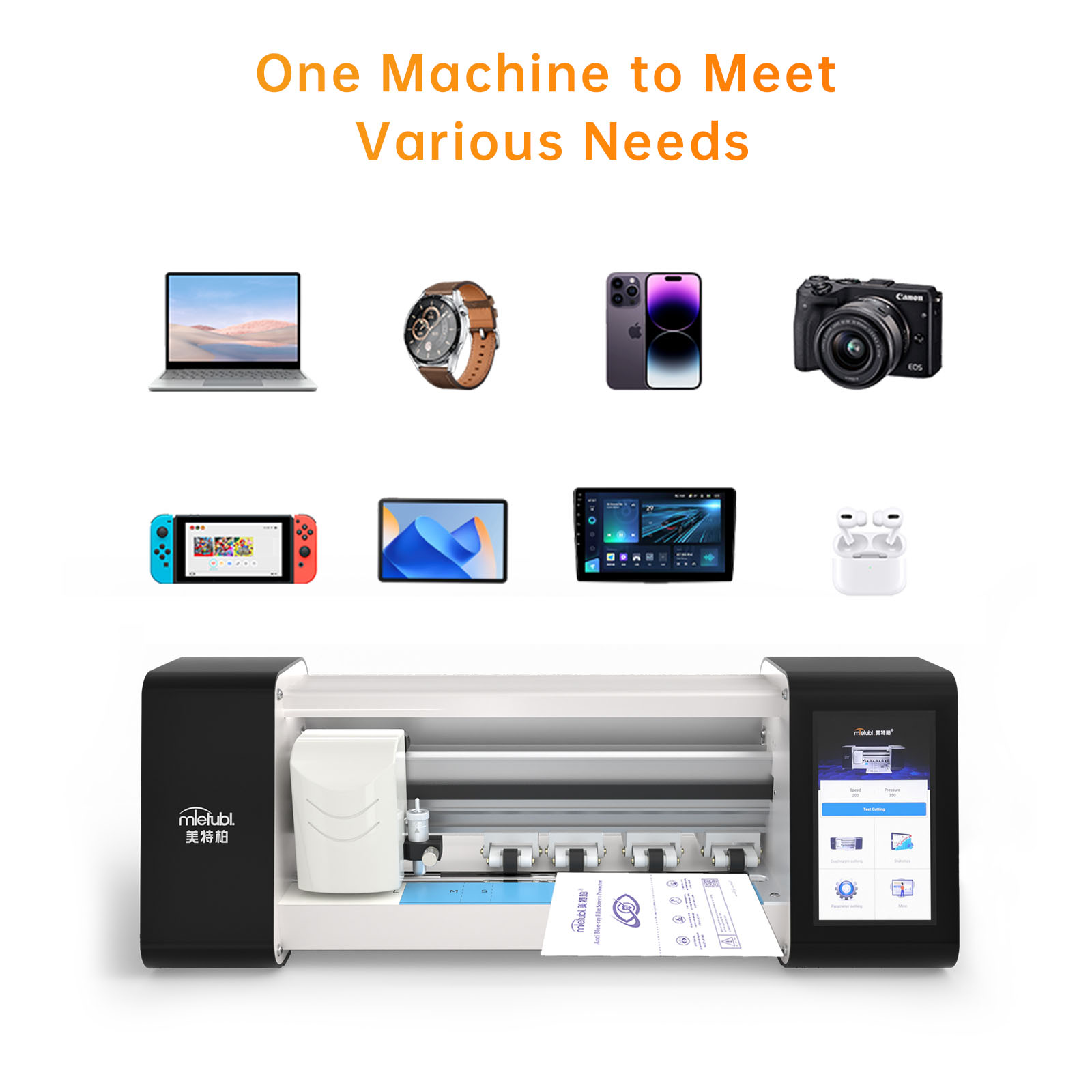
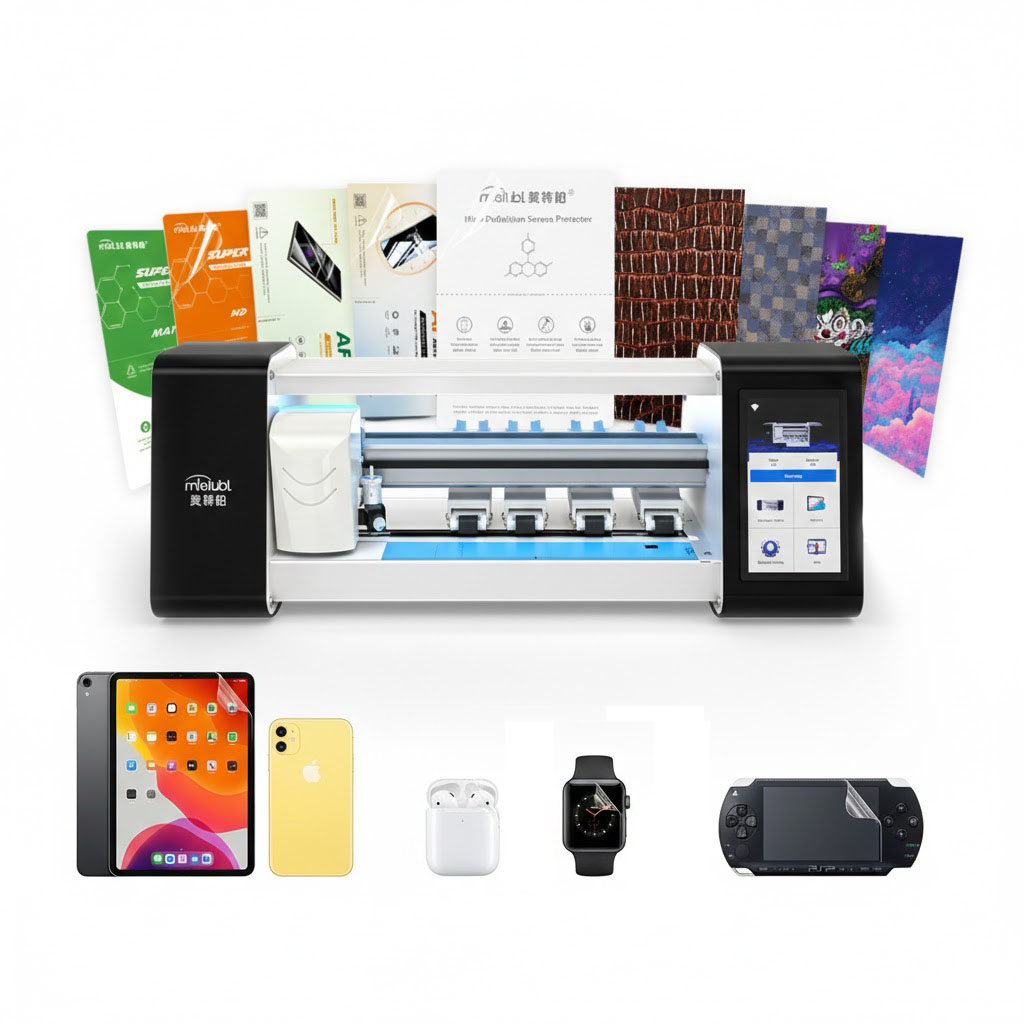
After confirming the pattern, the operator chooses an appropriate material and sends the cutting instruction. The MTB-CUT 180T supports TPU, PET, clear, matte, and privacy films. Cutting takes approximately 20 seconds, after which staff remove the finished protector, prepare the device screen, and complete the application.
This sequence is most relevant to retailers offering on-demand protection without holding a finished protector for every device model.
Where does design selection fit before cutting?
For screen protector service, “design” usually means selecting the correct device template rather than creating decorative artwork. The important control point is confirming the exact model and required film type before cutting. Staff should distinguish between similar model names, regional versions, and different device generations to reduce avoidable material use.
The workflow can also extend beyond phones. The MTB-CUT 180T supports patterns for phones, tablets, watches, and cameras, allowing a store to consider a wider device-service menu. Buyers should still confirm that the database contains the specific models most frequently requested in their target market.
When should printing enter the retail workflow?
Printing is not necessary when the store only provides clear, matte, privacy, or similar cut-to-shape protectors. In that workflow, the selected film already has its required surface characteristics, and the machine’s role is to cut the correct outline.
Printing becomes relevant when customers want personalized images, decorative phone back films, photos, labels, or cards. The MTB-CUT M888 is the model in the supplied range that explicitly combines printing and cutting. It also provides built-in templates, image upload, AI cutout, and AI-assisted design functions. A retailer should therefore define the intended product menu before deciding between a dedicated cutter and an integrated print-and-cut machine.
What should buyers check against their store process?
The practical decision is whether the machine matches each step from customer request to finished application. Key criteria include:
- Service scope: Choose a dedicated cutter for on-demand screen protection, or an integrated model when printed personalization is part of the offer.
- Model availability: Check the database against local best-selling phones, tablets, watches, and other devices before deployment.
- Material menu: Decide whether staff will offer clear, matte, privacy, TPU, PET, or a smaller standardized selection.
- Operating cost structure: The MTB-CUT 180T does not use credits or charge by cutting count, which may simplify ongoing cost planning.
- Counter procedure: Create a repeatable sequence for model confirmation, material loading, cutting, screen preparation, and installation.
Buyers should also test the complete staff workflow rather than assessing cutting alone. A fast machine cannot correct an incorrectly selected device template or unsuitable material.
Common Questions
Is the MTB-CUT 180T suitable for immediate in-store service?
It may be suitable where staff cut and apply protectors while the customer waits. Its approximate 20-second cutting cycle supports an immediate-service format, although total service time also depends on model verification, screen cleaning, and application.
Does a phone film cutting store also need a printer?
Not for standard cut-on-demand protectors. A printer is relevant when the business plans to produce personalized graphics, decorative back films, labels, photos, or similar printed products.
What should a distributor verify before ordering?
Confirm required device coverage, preferred film materials, staff operating languages, regional electrical requirements, and whether customers need cutting only or combined printing and cutting. Commercial and after-sales terms should also be confirmed for the intended market.
Conclusion
For a retail workflow centered on selecting a device model, cutting a protector, and applying it immediately, the MTB-CUT 180T is a practical candidate with broad model and material support and no per-cut charging structure. If customized printing is central to the planned service menu, buyers should instead evaluate an integrated print-and-cut model such as the MTB-CUT M888 before making the procurement decision.
About Mietubl
Mietubl is a Guangzhou-based mobile accessories brand whose name reflects its guiding idea: Make It Easier To Use, Better Life. With roots in the mobile accessories industry dating to 1998 and the MIETUBL brand registered in 2010, the company focuses on products that make everyday digital use simpler and more practical.
Its portfolio includes screen protectors, intelligent screen protector cutting machines, film materials, data cables, chargers, power banks, and audio accessories. By combining design, product development, manufacturing, and channel support, Mietubl works with distributors and retailers serving a broad range of mobile accessory needs, with products exported to more than 120 countries and regions.
For product information, samples, or distribution opportunities, contact Marketing@mietubl.com or visit www.mietubl.com.
Was this article helpful?
Your feedback helps us improve future articles.