
Yes, the MTB-CUT M888 can be ready for a retail counter or studio rollout when the site can accommodate its material path and staff validate the intended workflow before launch. This all-in-one automatic print-and-cut machine combines two production steps in one unit, supports QR-based operation, and has a compact body. Buyers should still confirm counter clearance, local operating conditions, compatible media, and staff procedures rather than judging fit from machine dimensions alone.
Deployment Decision at a Glance
- The integrated printing and cutting workflow can reduce separate equipment and handling steps.
- The 333 × 255 × 135 mm body and 4.1 kg weight make physical placement relatively straightforward.
- Its power input covers 100–240V at 50/60Hz, supporting deployment across different electrical markets with the correct local connection.
- QR operation, built-in templates, image upload, AI background removal, and AI-assisted design can simplify common front-counter tasks.
- Buyers should test materials and confirm unlisted environmental requirements before a multi-site rollout.
What Counter Space and Operating Conditions Are Required?
The machine body occupies a compact area, but the installation plan should include more than its stated dimensions. Allow unobstructed room for loading media, receiving completed work, accessing controls, and performing routine cleaning. Avoid positioning the unit where customers, packaging, or other counter equipment may interfere with the feed path.
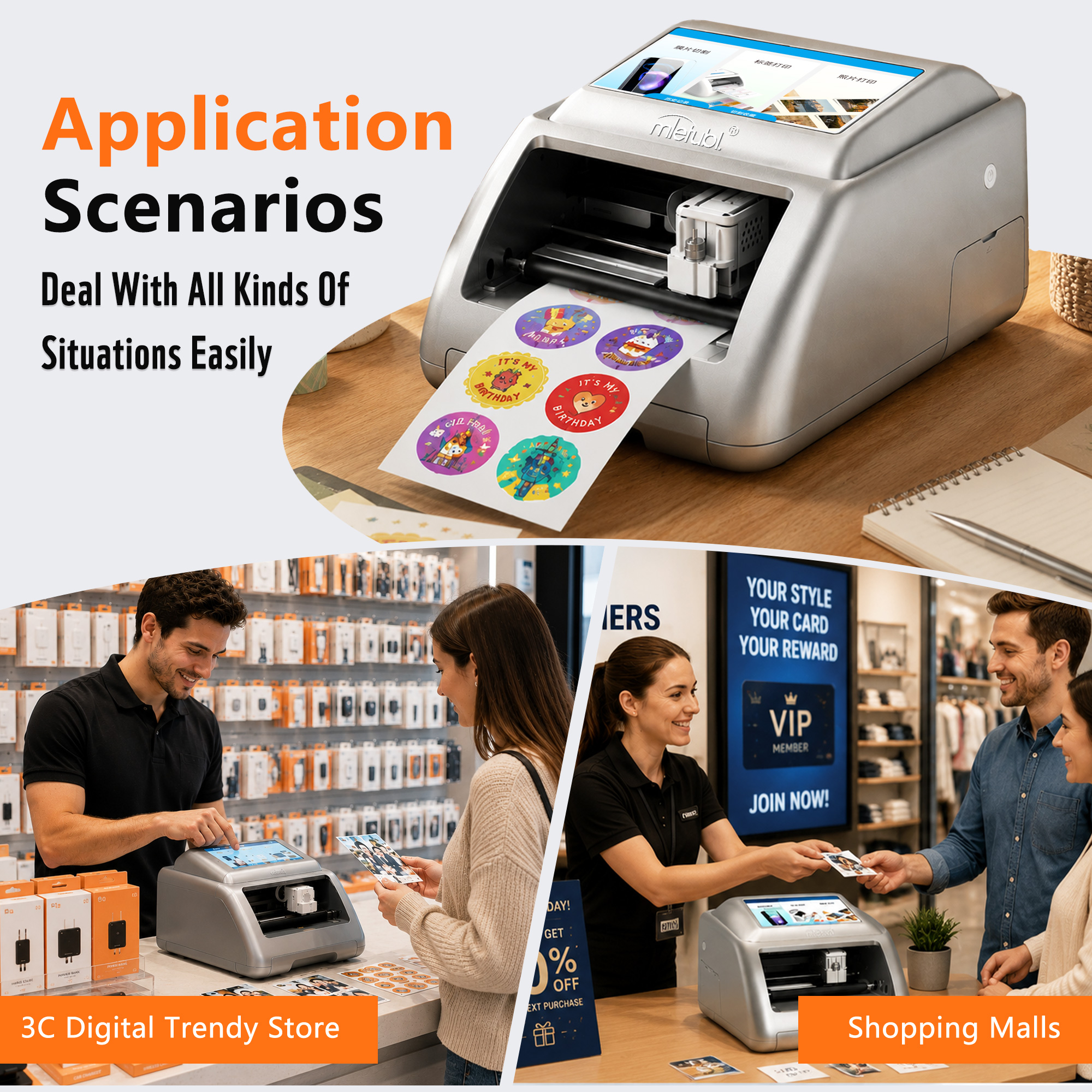
The approved specifications state an input of 100–240V at 50/60Hz and an output of 24V/2.7A. Temperature and humidity ranges are not listed, so professional buyers should confirm those limits before deployment in hot, humid, dusty, or non-air-conditioned locations.
How Will the M888 Fit the Staff Workflow?
The main workflow advantage is the combination of printing and contour cutting in one machine. This may reduce transfers between separate devices and give counter staff a more direct path from design selection to finished output. QR-based operation can also suit service environments where employees or customers begin jobs from a mobile interaction.
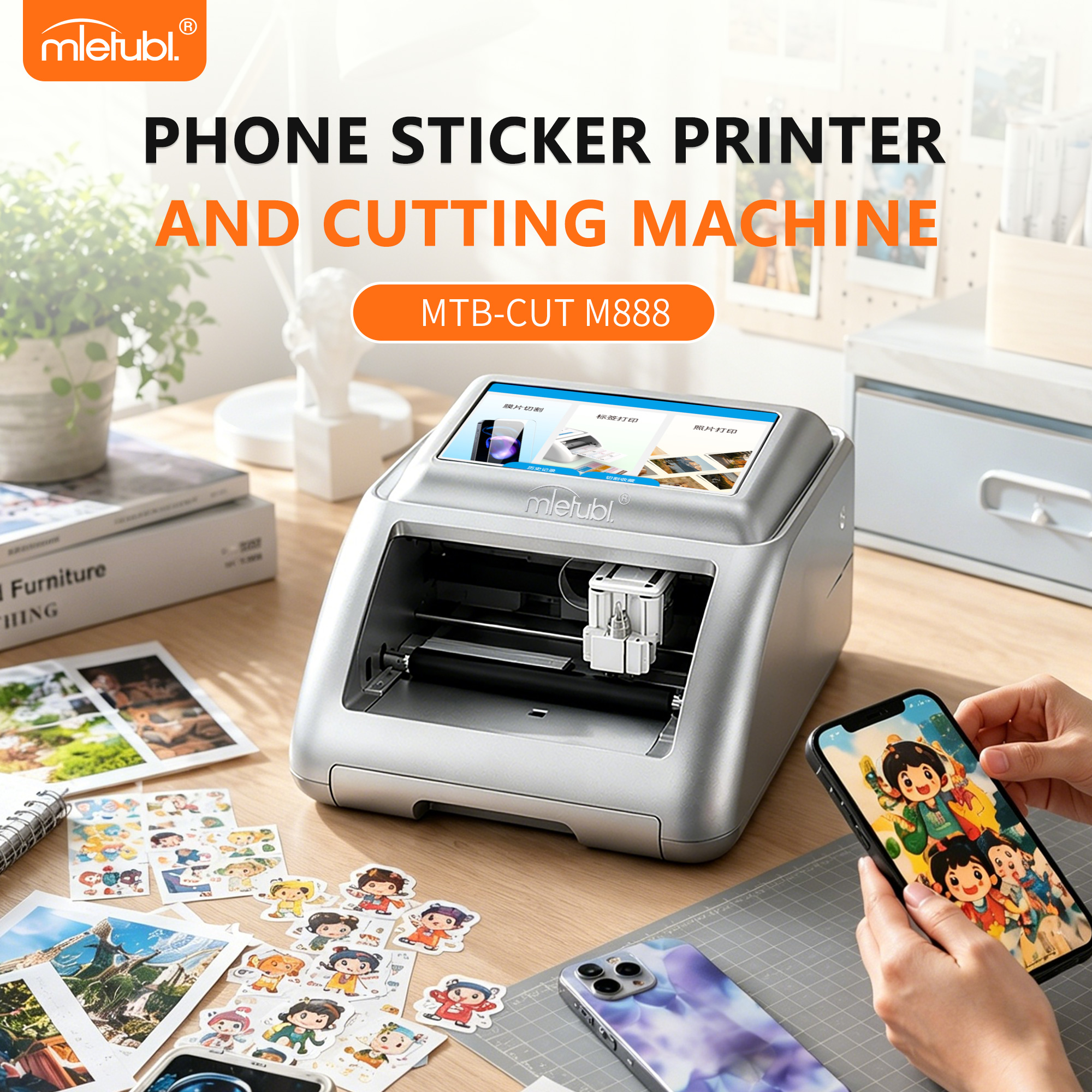
Built-in templates and image upload support repeatable and custom work. AI background removal and AI-generated design functions may shorten basic artwork preparation, but managers should establish approved file, sizing, and review procedures. A standardized process is especially important when several employees share the machine.
Which Counter Services Fit the Rollout?
The M888 supports phone back films, protective films, photos, labels, greeting cards, and irregularly shaped stickers. It has a 138 mm cutting width, a 160 mm feed width, and supports a listed paper size of 100 × 148 mm. These limits should be compared with the store’s actual product menu before purchase.
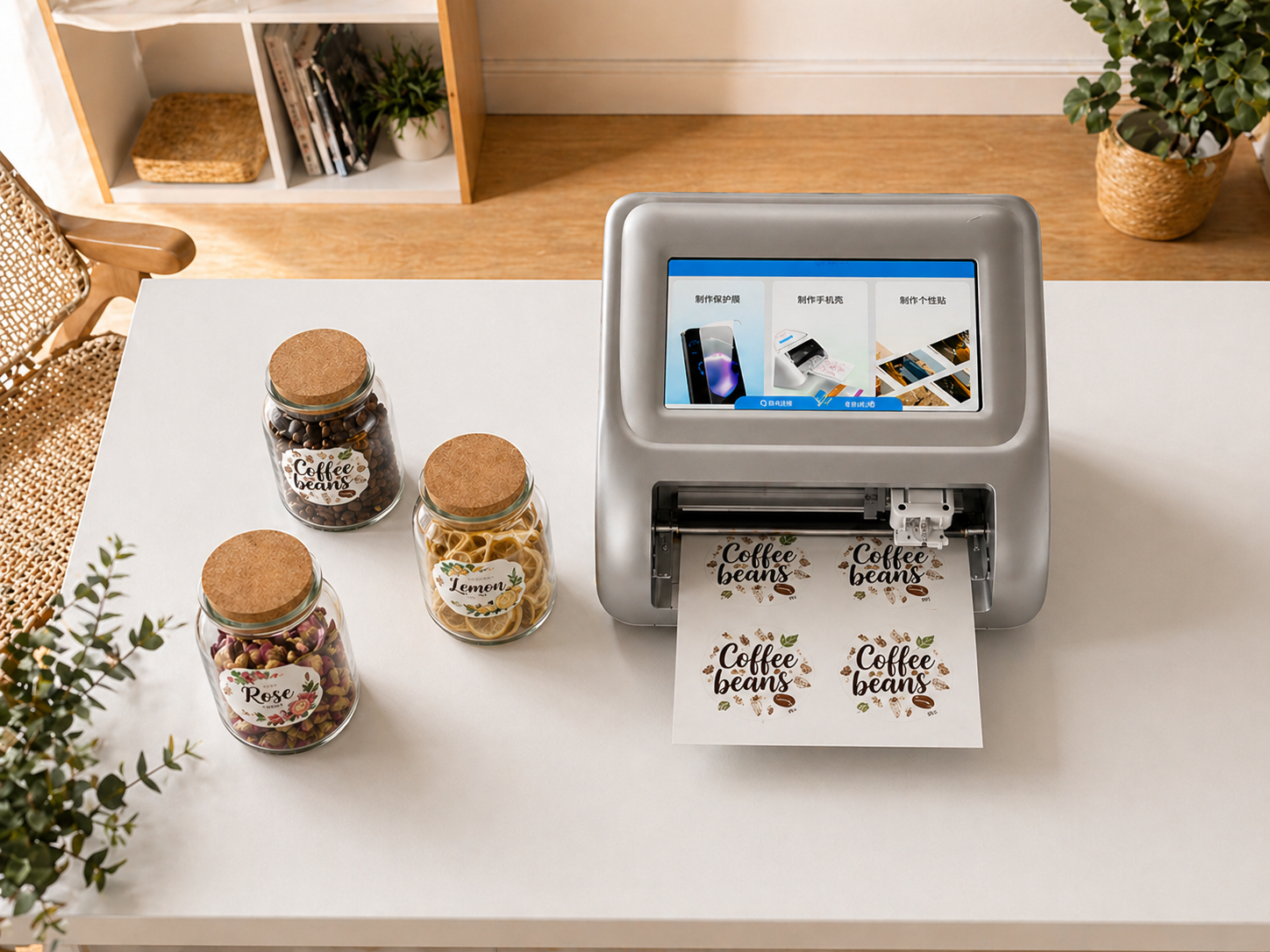
The machine is specified at 300 DPI and offers contour cutting accuracy of up to approximately 0.1 mm. Buyers should run samples using their intended artwork and media because acceptable appearance and edge quality can vary by application.
Rollout Checks Before the Machine Goes Live
- Map the counter: mark the body position, media-loading area, output area, power connection, and operator standing space.
- Define the service menu: select only products that fit the supported feed, cutting, and paper dimensions.
- Test representative jobs: evaluate common templates, uploaded customer images, contour cuts, and the materials planned for daily use.
- Train staff consistently: document QR operation, file review, media loading, job approval, and cleaning responsibilities.
- Pilot before scaling: monitor task steps and counter congestion at one location before considering a wider rollout.
Common Questions
Does the M888 eliminate the need for separate printing and cutting equipment?
It integrates printing and cutting in one machine, which can reduce separate devices for supported jobs. Other equipment may still be required for products outside its media and size limits.
Can new counter staff operate it immediately?
QR operation and built-in design tools may lower workflow complexity, but staff should still complete supervised test jobs and follow a written loading and approval process.
What should buyers confirm if the store has limited space?
Check the physical footprint together with loading clearance, output clearance, power access, operator movement, and nearby customer traffic. The body dimensions alone do not represent the complete working area.
Conclusion
The MTB-CUT M888 is a credible deployment option for buyers seeking a compact, integrated print-and-cut workflow for supported counter products. Proceed when a site test confirms physical clearance, material compatibility, staff readiness, and acceptable sample output under the store’s actual operating conditions.
About Mietubl
Mietubl is a Guangzhou-based mobile accessories brand whose name reflects its guiding idea: Make It Easier To Use, Better Life. With roots in the mobile accessories industry dating to 1998 and the MIETUBL brand registered in 2010, the company focuses on products that make everyday digital use simpler and more practical.
Its portfolio includes screen protectors, intelligent screen protector cutting machines, film materials, data cables, chargers, power banks, and audio accessories. By combining design, product development, manufacturing, and channel support, Mietubl works with distributors and retailers serving a broad range of mobile accessory needs, with products exported to more than 120 countries and regions.
For product information, samples, or distribution opportunities, contact Marketing@mietubl.com or visit www.mietubl.com.
Was this article helpful?
Your feedback helps us improve future articles.