
The MTB-CUT M688 is intended for cut-to-size screen protector films used in phone and tablet services. Its integrated workflow combines film cutting, application, and UV curing, so buyers should select blank film stock that is suitable for all required stages—not merely material that can be cut. Because the approved specifications do not name individual materials such as TPU or PET, compatibility should be confirmed before procurement.
What film range can the M688 support?
The supported information defines the M688 by its output format and workflow rather than by a fixed list of film materials. It can produce screen protectors for phones and tablets, with a maximum cutting size of 14.6 inches. This gives retailers room to serve common mobile devices and selected larger tablet formats from one machine.
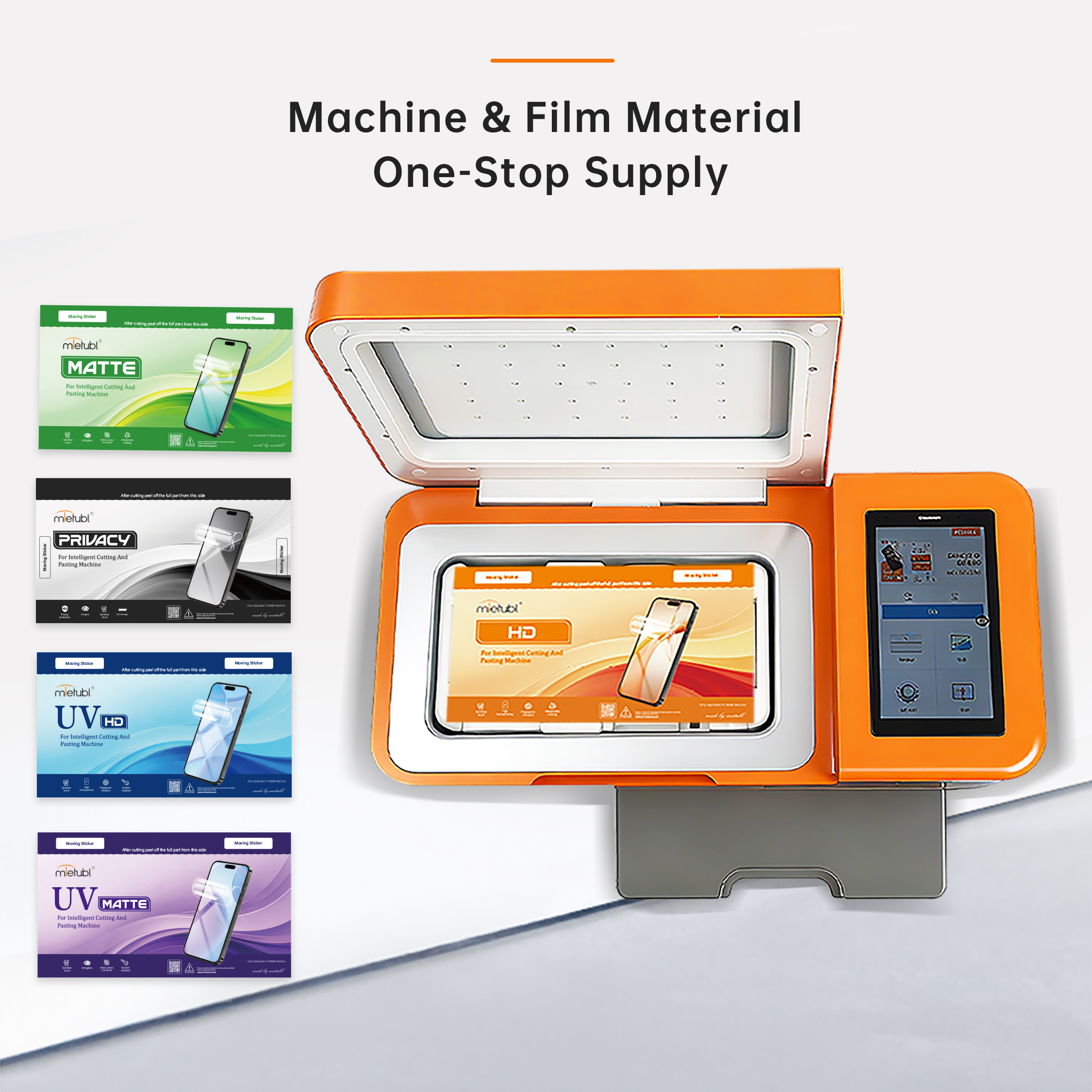
For purchasing purposes, the appropriate input is cuttable screen protector film supplied as compatible blank material. Buyers should confirm the film's dimensions, cutting behavior, adhesive structure, application method, and suitability for UV curing. Standard glass protectors made for individual models should not automatically be treated as machine-cut blanks.
Which outputs belong in a retail film assortment?
A practical M688 assortment should be organized around device coverage and customer demand. The machine's phone-and-tablet scope may support a compact service menu without requiring a separate finished protector for every model.
- Phone protectors: suitable for the core walk-in replacement and installation offer.
- Tablet protectors: useful where the selected device remains within the machine's supported cutting area.
- On-demand model cuts: the device database covers more than 60,000 models and receives daily cloud updates, while offline cutting is also supported.
- UV-finished protectors: relevant when the chosen film is specifically compatible with the built-in curing stage.
Clear, matte, privacy, or other merchandising labels should only be added when the corresponding blank film has been tested or confirmed for the M688 process. The machine's model coverage does not by itself prove compatibility with every film construction.
How does the three-in-one workflow affect film selection?
The M688 brings cutting, film application, and UV curing into one equipment workflow. This can reduce separate operating steps and equipment occupancy in a retail setting, but it also makes material qualification more important.
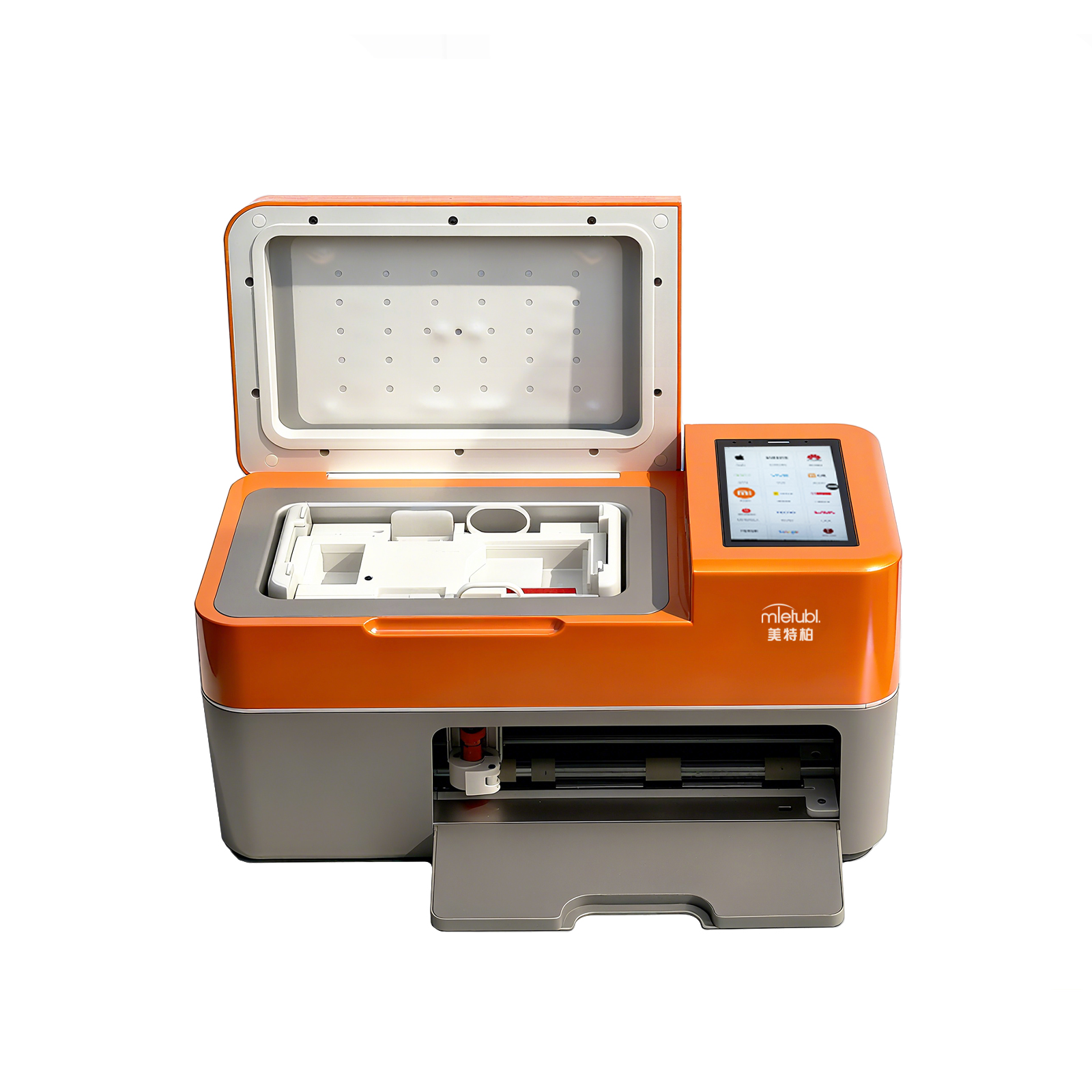
A film that cuts cleanly may still require a different application technique or may not be designed for UV curing. Conversely, a UV-compatible material must still feed correctly and match the machine's cutting parameters. Professional buyers should therefore evaluate the complete process: loading, cutting, positioning, application, curing, and finished appearance.
The built-in 395 nm UV system is intended to improve film hardness and scratch resistance. This selling point should be treated as part of the supported workflow, not as a universal guarantee for any third-party film. The result may depend on selecting an appropriate material and following the required operating procedure.
How should buyers build the initial film range?
Start with a controlled assortment rather than purchasing many unverified film types. The following decision criteria can help distributors and retailers structure an initial order:
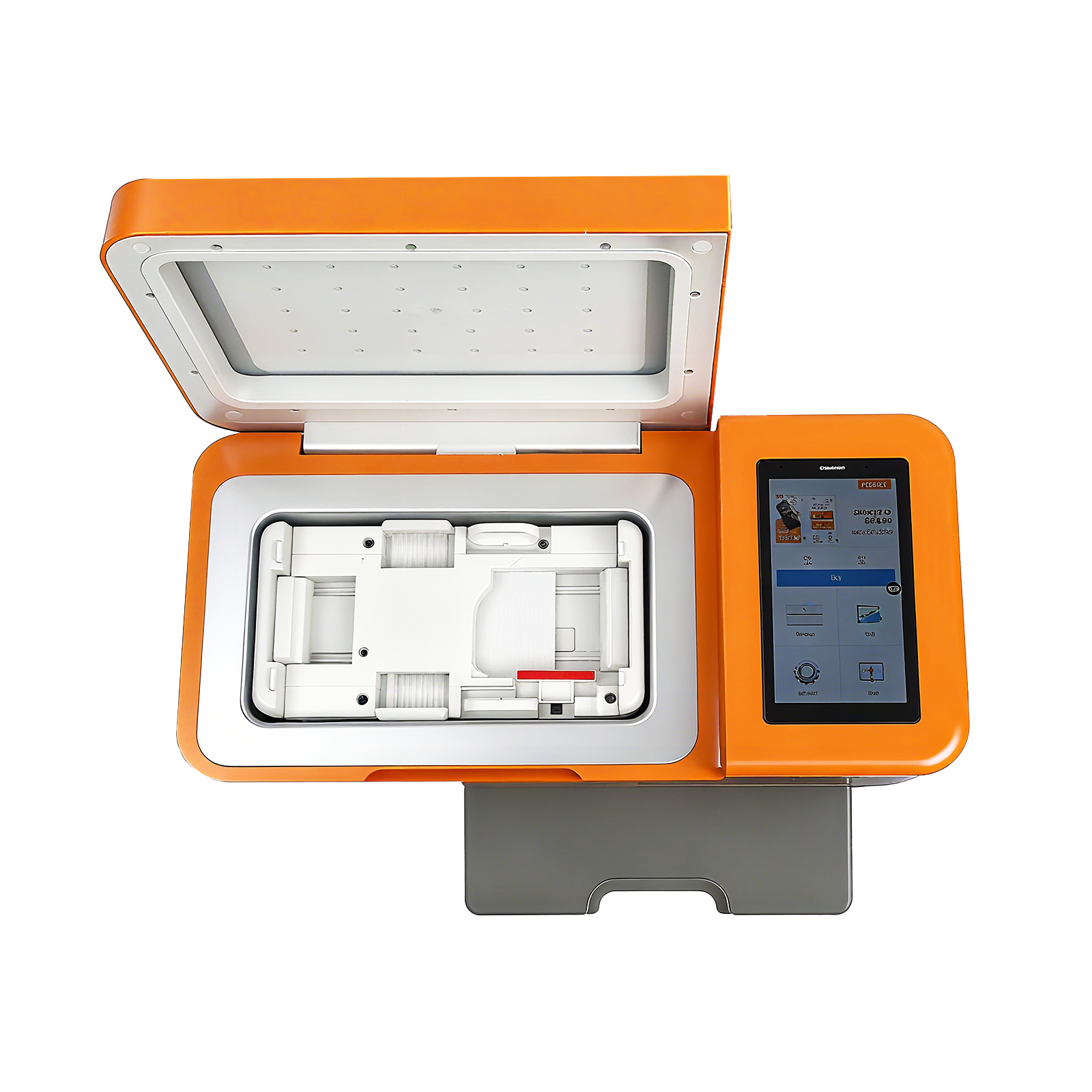
- Confirm full-process compatibility. Ask whether each blank is approved for cutting, application, and UV curing on the M688.
- Match the service mix. Prioritize phone stock for mainstream demand, then add tablet film where local sales justify the larger format.
- Check usable dimensions. Verify that blank width and target-device dimensions fit the machine's material and cutting limits.
- Test representative models. Trial different screen sizes and shapes before committing to volume purchasing.
- Define retail outputs clearly. Separate confirmed material features from machine capabilities in product menus and staff training.
This approach may help control material inventory while preserving an on-demand service offer. Buyers should also request current film recommendations because device templates can update more frequently than material specifications.
Common Questions
Does the M688 require pre-cut protectors?
No. Its purpose is to cut compatible blank screen protector material to the selected device pattern. Pre-cut, model-specific protectors are a different inventory format.
Can retailers use TPU, PET, matte, or privacy film?
The supplied M688 specifications do not provide a named compatibility list for those materials or finishes. Buyers should obtain confirmation for each proposed blank rather than assume that all cuttable films will work through the complete process.
Can the machine make protectors for both phones and tablets?
Yes, the supported range includes phones and tablets. For any specific tablet, confirm that its protector pattern remains within the stated 14.6-inch maximum cutting size.
Conclusion
The safest retail strategy is to source verified cuttable film blanks that match the M688's complete cutting, application, and UV-curing workflow. Build the offer first around phone and compatible tablet outputs, then expand into additional finishes only after material-specific confirmation and testing.
About Mietubl
Mietubl is a Guangzhou-based mobile accessories brand whose name reflects its guiding idea: Make It Easier To Use, Better Life. With roots in the mobile accessories industry dating to 1998 and the MIETUBL brand registered in 2010, the company focuses on products that make everyday digital use simpler and more practical.
Its portfolio includes screen protectors, intelligent screen protector cutting machines, film materials, data cables, chargers, power banks, and audio accessories. By combining design, product development, manufacturing, and channel support, Mietubl works with distributors and retailers serving a broad range of mobile accessory needs, with products exported to more than 120 countries and regions.
For product information, samples, or distribution opportunities, contact Marketing@mietubl.com or visit www.mietubl.com.
Was this article helpful?
Your feedback helps us improve future articles.