
Buyers should not order film for the MTB-CUT M688 by relying on a generic label such as “universal screen protector film.” The approved product data does not identify specific film chemistries or thickness ranges. Before placing a bulk order, confirm that the selected material can be cut within the machine’s dimensional limits, applied through its guided workflow, and—when that stage is used—processed with its integrated 395 nm UV-curing system.
What must be confirmed before ordering film?
Procurement should begin with a written material specification and a sample trial rather than an assumption about compatibility. The most important decision criteria are:
- Material construction: Ask the supplier to identify the film chemistry, layer structure, liner, adhesive system, and intended application process.
- Stock dimensions: Confirm that the supplied format fits the M688’s feeding and cutting limits.
- Cut response: Verify that the film and liner can be separated cleanly using suitable cutting-force and speed settings.
- UV-stage compatibility: If the complete cut, apply, and cure workflow will be used, obtain confirmation that the material is intended for 395 nm UV processing.
- Finished-device coverage: Test representative phone and tablet models instead of approving material from one small handset sample.
Check stock dimensions against the M688 limits
The MTB-CUT M688 has a maximum material width of 235 mm and a maximum cutting width of 213 mm. Its maximum stated cutting size is 14.6 inches, or 324.4 × 208.6 mm. These figures should be compared with the actual width, usable coated area, liner margins, and orientation of the proposed film.
A nominal stock width alone is not enough. Buyers should ask whether edge areas are usable and whether registration, loading, or handling margins reduce the available cutting area. For tablet programs, approve the largest intended pattern before committing to stock quantities.
Validate the complete cut, apply, and UV workflow
The M688 combines film cutting, film application, and UV curing in one machine. This can reduce separate equipment and operating steps, but it also makes process compatibility a procurement requirement. A material that cuts successfully is not automatically proven suitable for guided application or UV curing.
Request a trial covering all stages that will be used in production. Inspect whether the cut releases from the liner properly, aligns with the target device, applies without process-related defects, and responds as expected during curing. Because the approved M688 information does not specify supported film types or thicknesses, the material supplier should provide those details in writing.
Set a sample-approval standard before the purchase order
A professional sample test should use the same material construction and dimensions planned for the commercial order. Record the machine settings used for each approved SKU, including cutting force and speed, rather than assuming one setting will suit every material.
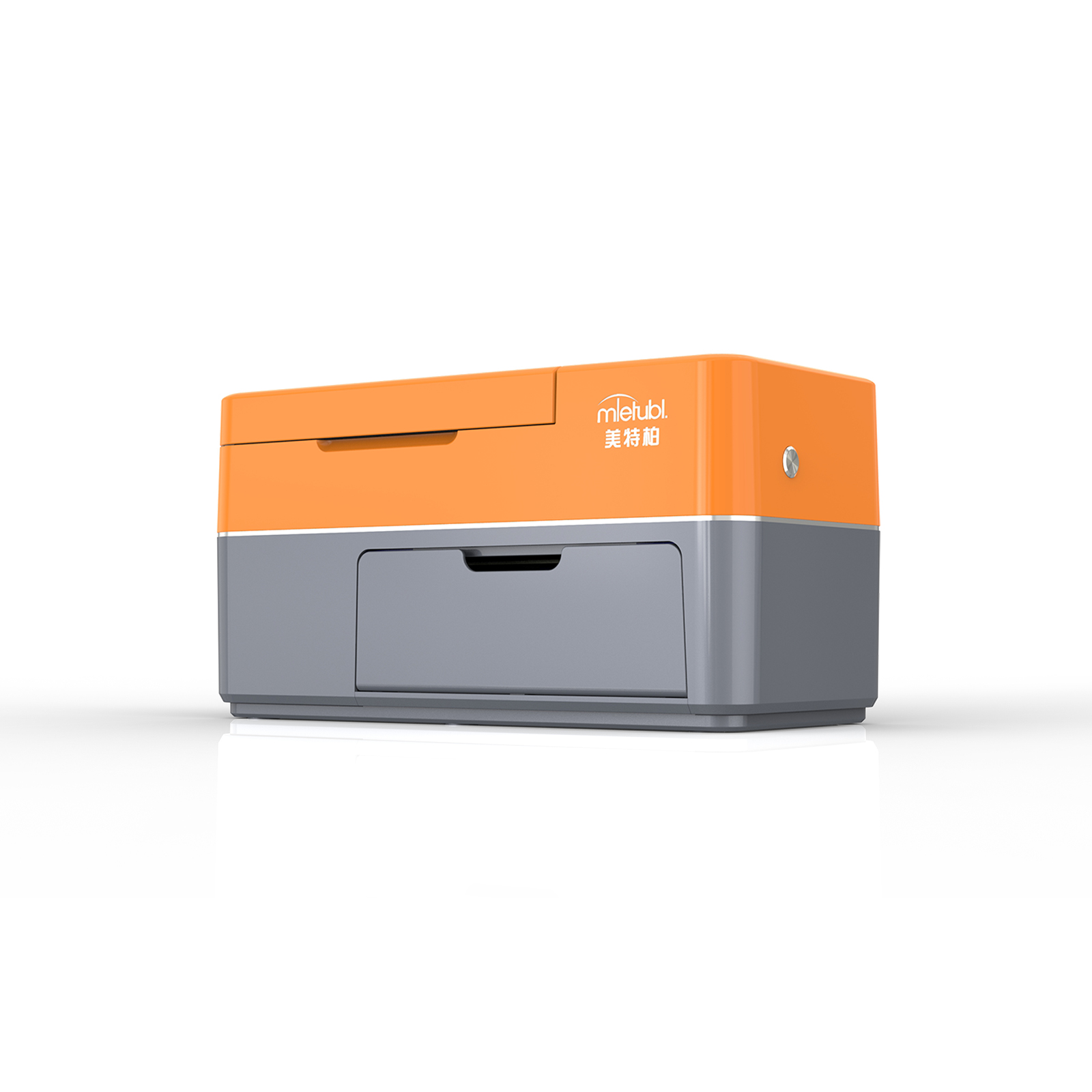
The M688 has a stated cutting force of 1000 g and a cutting speed of 500 mm/s, but these machine capabilities do not establish that every film can be processed at those values. Buyers should obtain recommended settings and test whether the liner remains intact while the film layer is cut consistently.
The purchase order can also require the supplier to disclose any change in film, adhesive, liner, coating, or thickness. This helps prevent an approved sample from being replaced by materially different stock in a later shipment.
Common Questions
Can the MTB-CUT M688 use TPU or PET film?
The supplied M688 data does not name TPU, PET, or other specific material categories. Do not treat compatibility as confirmed until the proposed SKU has been tested through the required cutting and application workflow.
Does every film need UV curing?
Not necessarily. The machine includes a 395 nm UV-curing system, but the required process depends on the chosen material. Buyers should ask the film supplier whether UV curing is required, optional, or unsuitable for that SKU.
What should appear on the film purchase specification?
Include the material construction, overall thickness, adhesive and liner details, stock dimensions, UV requirements, compatible device range, recommended machine settings, sample-approval reference, and rules for notifying the buyer of material changes.
Conclusion
The correct film for the MTB-CUT M688 is not established by a category name alone. Approve a clearly documented material SKU only after confirming dimensions, cutting behavior, application results, and any required 395 nm UV-curing compatibility across representative devices.
About Mietubl
Mietubl is a Guangzhou-based mobile accessories brand whose name reflects its guiding idea: Make It Easier To Use, Better Life. With roots in the mobile accessories industry dating to 1998 and the MIETUBL brand registered in 2010, the company focuses on products that make everyday digital use simpler and more practical.
Its portfolio includes screen protectors, intelligent screen protector cutting machines, film materials, data cables, chargers, power banks, and audio accessories. By combining design, product development, manufacturing, and channel support, Mietubl works with distributors and retailers serving a broad range of mobile accessory needs, with products exported to more than 120 countries and regions.
For product information, samples, or distribution opportunities, contact Marketing@mietubl.com or visit www.mietubl.com.
Was this article helpful?
Your feedback helps us improve future articles.