
Buyers should validate the MTB-CUT M688 with representative materials and devices before approving an order. The machine combines film cutting, guided application, and UV curing, but the supplied data does not identify every compatible film construction. A practical sample trial should therefore confirm that the buyer’s actual materials cut cleanly, apply correctly, and respond as expected to the curing stage.
What Should the M688 Sample Prove?
A sample evaluation should reproduce the intended commercial workflow rather than demonstrate only that the machine powers on or completes a single cut. Use the films, device models, operators, and acceptance rules that are likely to be used after deployment.
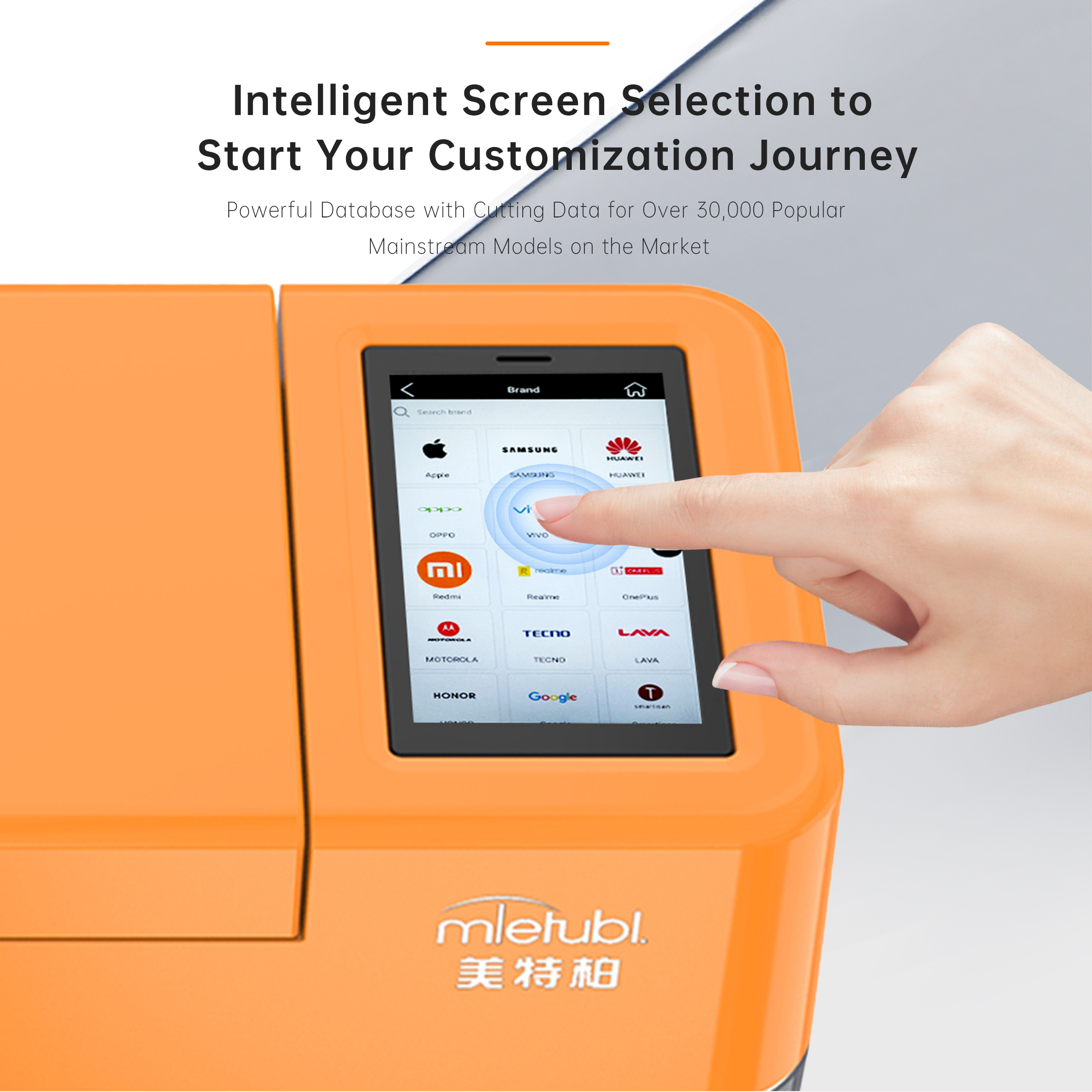
- Material compatibility: Confirm each selected film can be cut, handled, applied, and, where relevant, UV cured.
- Model fit: Check edge alignment, openings, corners, and usable coverage on representative devices.
- Finished output: Define acceptable appearance, adhesion, surface condition, and placement before testing.
- Workflow usability: Have the expected operators complete the full process using the machine’s guided controls.
This approach is particularly important because the M688 is positioned as a three-in-one machine. Approval should reflect the complete output, not one successful stage.
Material Compatibility Must Be Verified, Not Assumed
The approved product information specifies an integrated 395 nm UV curing system, described as improving film hardness and scratch resistance. It does not provide a complete list of supported film materials. Buyers should not treat the presence of UV curing as confirmation that every stock film, coating, adhesive, or liner will produce the same result.
Prepare samples from each commercially important material family, including different suppliers or constructions where applicable. Observe feeding, cutting, release from the liner, positioning, adhesion, and post-curing appearance. Any film that curls, shifts, marks, lifts, or changes visually should be reviewed separately rather than averaged into an overall pass result.
Testing should also reflect the expected operating environment. If materials are normally stored or applied under different temperature or humidity conditions, buyers should reproduce those conditions where practical and document them with the result.
Build a Representative Device and Film Test Set
The M688 supports cutting up to 14.6 inches, with a stated maximum cutting area of 324.4 × 208.6 mm. That capacity can cover phones and selected larger devices, but size alone does not establish successful fit. Curved corners, camera openings, speaker areas, narrow borders, and complex shapes can expose different process risks.
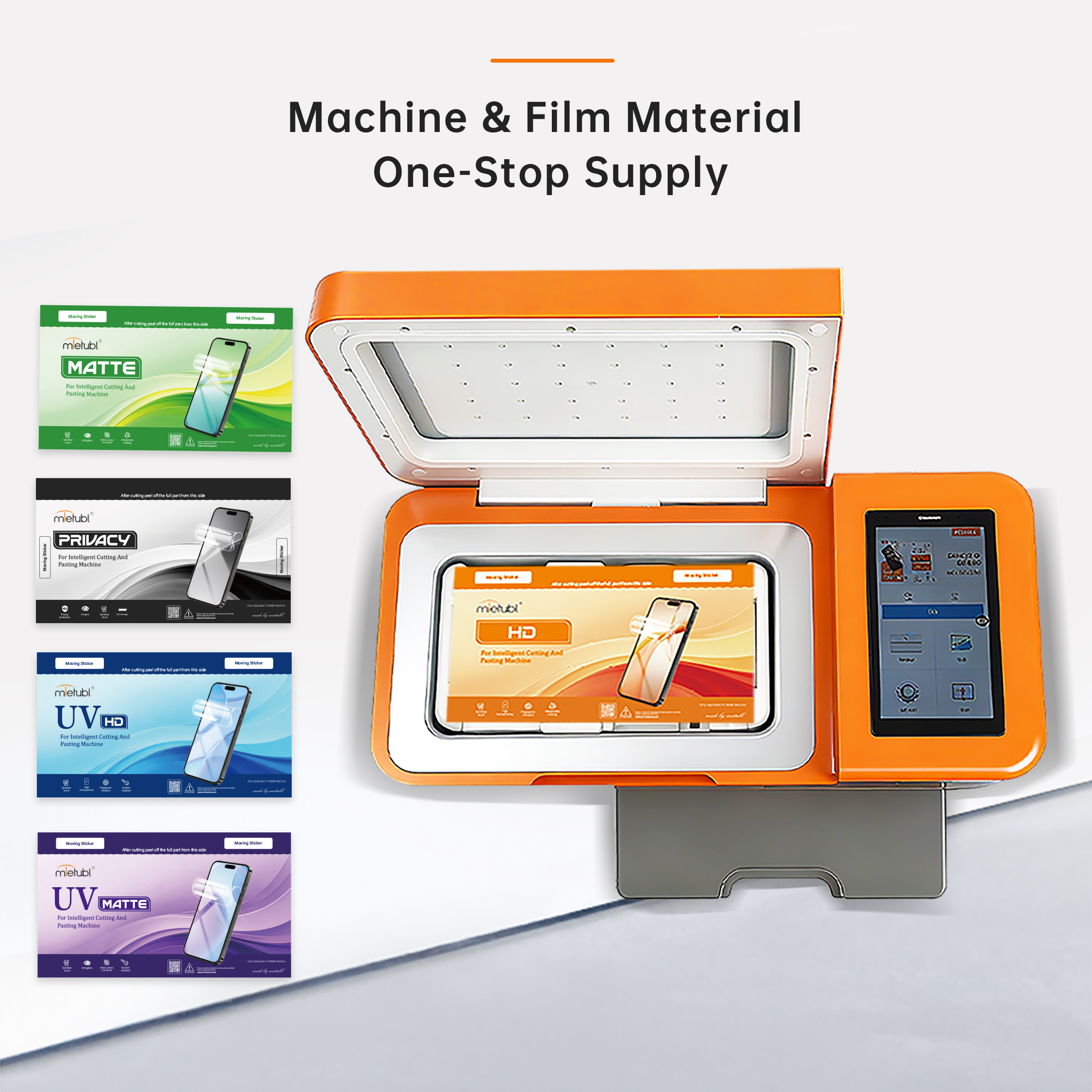
A useful validation set may include a high-volume phone model, a small device, a larger tablet-sized device within the supported area, and at least one design with detailed openings. Pair these devices with the actual films intended for sale. This produces more decision value than testing several similar rectangular patterns on one generic sheet.
The machine’s stated cutting accuracy is 0.1 mm. Buyers should still judge the completed application against their own fit tolerance because cutting accuracy, material movement, template selection, and placement can all affect the finished result.
Set Output Acceptance Rules Before Running Samples
Written acceptance criteria prevent subjective approval after a visually impressive demonstration. For each sample, record the selected model, material reference, operator, control method, and pass or fail result.
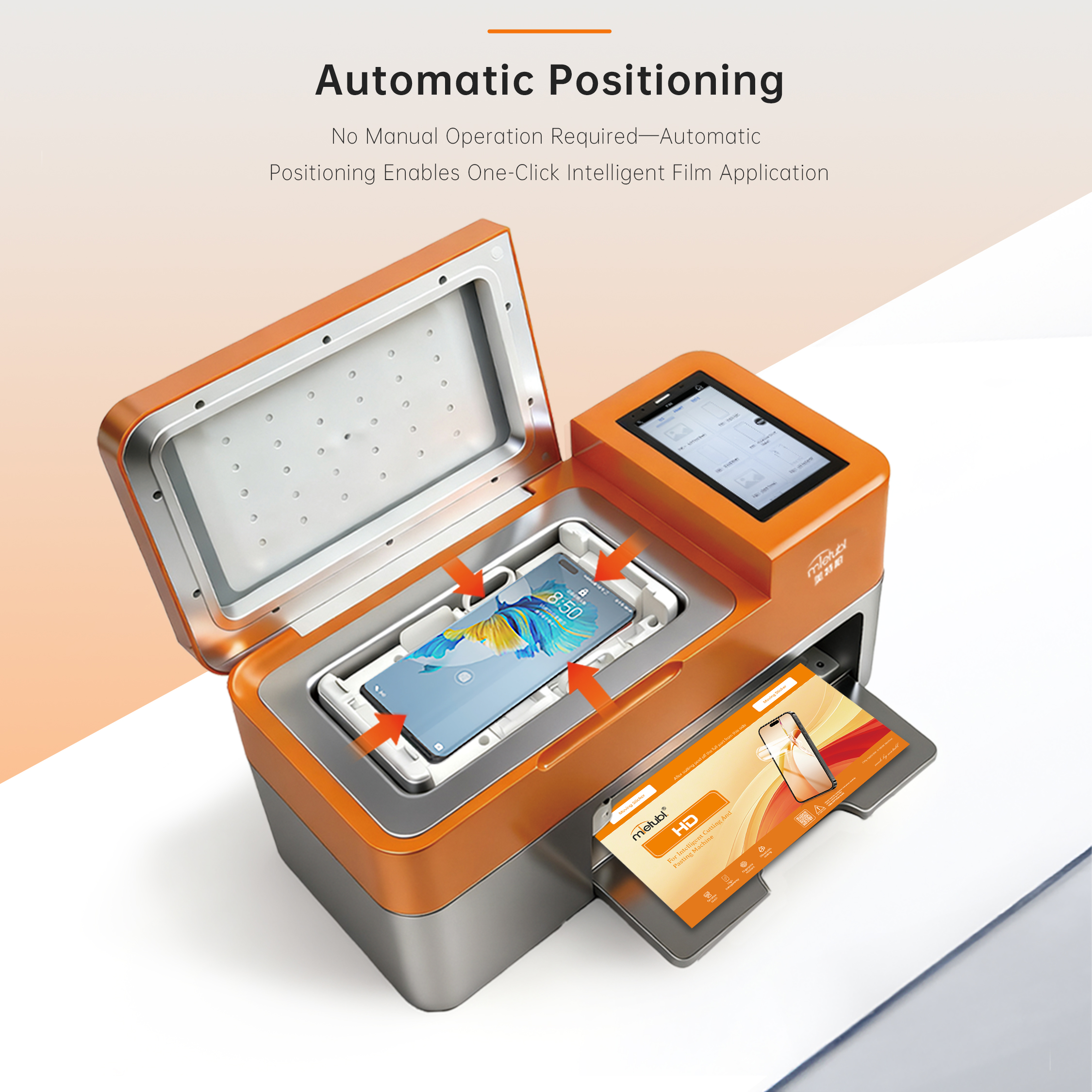
Acceptance checks should cover:
- Cut edges are clean and continuous, without unintended tearing or incomplete corners.
- Openings and borders align with the target device under the buyer’s defined tolerance.
- The film remains stable during handling and guided application.
- The finished surface meets the buyer’s rules for bubbles, marks, lifting, and visual consistency.
- The UV stage produces an acceptable result on the exact material being evaluated.
Repeat important samples rather than relying on a single pass. The M688 offers app control and a built-in operating system, while offline cutting is also supported. If offline operation matters to the planned deployment, include it as a separate acceptance test.
Common Questions
Can buyers approve the M688 from specifications alone?
No. Specifications help define the test boundary, but they do not confirm compatibility with a buyer’s particular film, adhesive construction, device mix, or finished-output standard.
How many materials should be included in the sample test?
Test every material family that is commercially important. Buyers with multiple suppliers, coatings, or thicknesses should include representative variations instead of assuming one successful film validates the others.
Should operators participate in validation?
Yes. The M688 uses standardized guided operation, but intended operators should still complete representative jobs. Their results can reveal handling, training, or acceptance issues that a supplier demonstration may not show.
Conclusion
The MTB-CUT M688 may be considered when a buyer wants cutting, guided film application, and UV curing in one machine, especially for devices within its supported size range. The sound procurement decision is conditional: approve it only when representative materials and devices repeatedly meet documented output criteria across the full workflow.
About Mietubl
Mietubl is a Guangzhou-based mobile accessories brand whose name reflects its guiding idea: Make It Easier To Use, Better Life. With roots in the mobile accessories industry dating to 1998 and the MIETUBL brand registered in 2010, the company focuses on products that make everyday digital use simpler and more practical.
Its portfolio includes screen protectors, intelligent screen protector cutting machines, film materials, data cables, chargers, power banks, and audio accessories. By combining design, product development, manufacturing, and channel support, Mietubl works with distributors and retailers serving a broad range of mobile accessory needs, with products exported to more than 120 countries and regions.
For product information, samples, or distribution opportunities, contact Marketing@mietubl.com or visit www.mietubl.com.
Was this article helpful?
Your feedback helps us improve future articles.