
A tempered glass screen protector that repeatedly lifts or falls off should not pass purchasing approval until the exact material construction has been tested on representative phone models. The problem may involve a mismatch among screen geometry, glass thickness, adhesive layer, installation conditions, or an intended phone case. Rather than assuming the installer or protector alone is responsible, buyers should validate the complete application combination before confirming production.
Make the Validation Decision Before Approving the Order
The key decision is whether the proposed protector construction remains attached and functional under the buyer’s actual selling conditions. A specification sheet can identify materials, but it cannot replace installation testing on the target devices.
- Confirm model mapping: Verify which construction is assigned to every phone model in the order.
- Test representative devices: Include relevant screen shapes, dimensions, and intended case combinations.
- Control installation: Use a repeatable cleaning, alignment, and application process.
- Define acceptance: Agree on visible edge lift, touch response, display coverage, and component retention criteria.
Verify Material Compatibility, Not Just Material Names
The HD Borderless Protector is listed with two different constructions. One uses 0.4 mm high-alumina glass, 280–380 μm antistatic AB adhesive, and 120cc curvature. The other uses 0.25 mm high-alumina glass, 150 μm antistatic AB adhesive, and 60cc curvature. These options should not be treated as interchangeable without confirming their intended model applications.
| Construction | Listed material combination | Buyer verification |
|---|---|---|
| Option 1 | 0.4 mm glass, 280–380 μm adhesive, 120cc curvature | Confirm the assigned models and test full-edge contact. |
| Option 2 | 0.25 mm glass, 150 μm adhesive, 60cc curvature | Confirm the assigned models and test fit under normal installation conditions. |
The relevant question is not whether a thicker or thinner construction is universally better. Buyers should determine whether the specified combination matches each device’s screen geometry and produces an acceptable installed result. If cases are part of the retail offer, samples should also be checked with those cases because contact at the protector edge may affect the final fit.
Build a Representative Sample Test
A useful sample plan should reflect the order mix rather than rely on one convenient phone. Test each important model or, when the range is large, select samples covering the main screen profiles and sales volumes. Any construction change should trigger another fit check.

- Confirm the sample label, phone model, and specified material construction.
- Clean and install each sample using one documented procedure.
- Inspect initial alignment, edge contact, bubbles, and visible screen coverage.
- Reinspect after an agreed observation period rather than accepting only the immediate result.
- Record results by model, construction, operator, and case condition.
Using multiple trained installers may help distinguish a repeatable product-fit issue from inconsistent handling. If failures cluster around one model or construction, buyers can request model-specific correction instead of rejecting or accepting the entire range without evidence.
Set Output Acceptance Around the Borderless Design
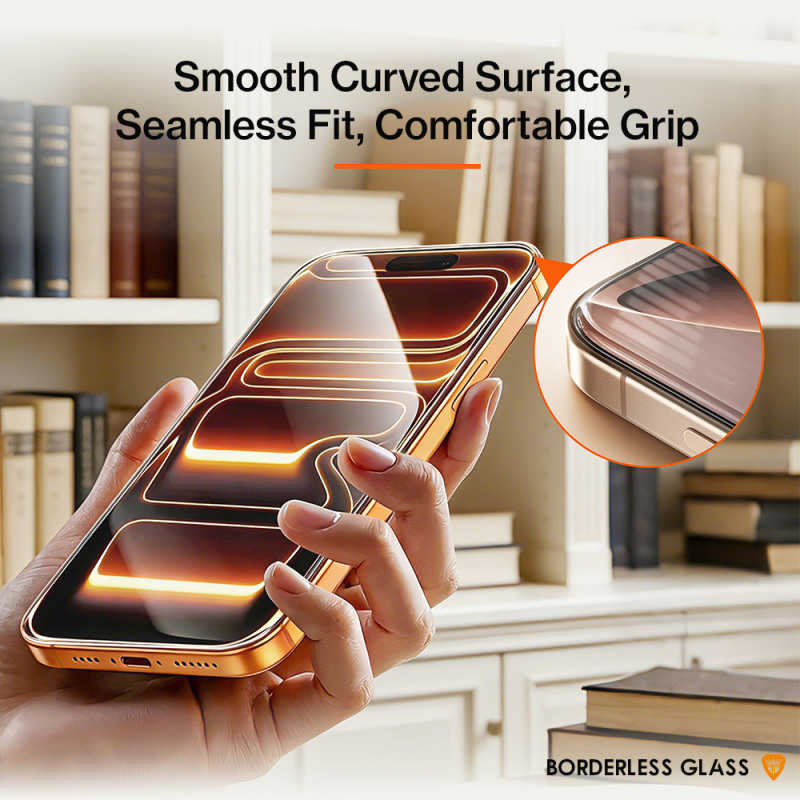
The product’s borderless design removes the traditional black printed edge and uses a transparent base to preserve more of the visible display area. Sample approval should therefore cover both adhesion and the intended viewing result. A protector that stays attached but obscures content, sits off-center, or produces unacceptable edge behavior has not met the full output requirement.
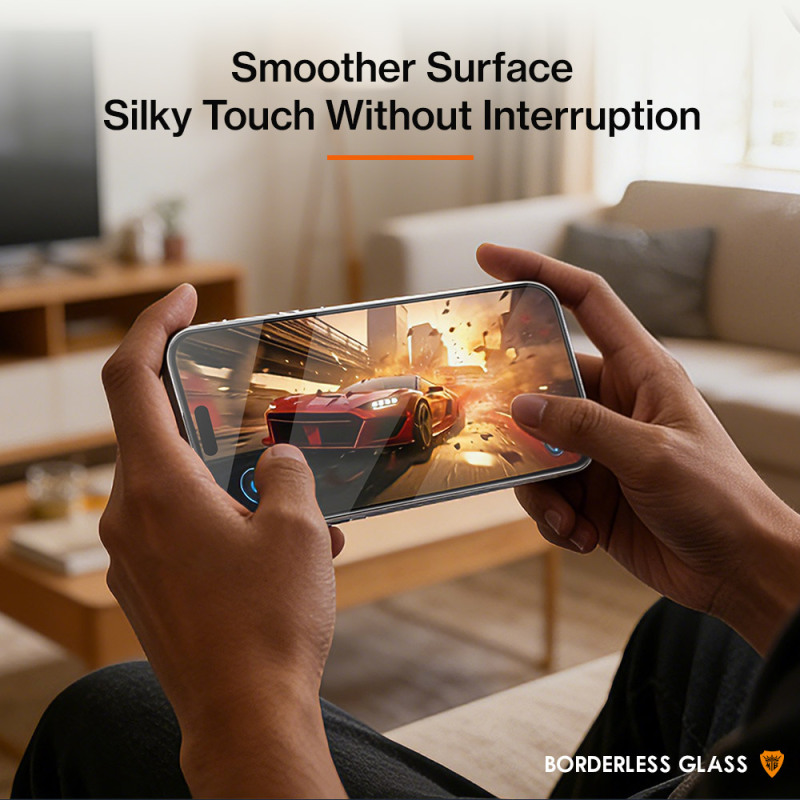
The integrated earpiece dust mesh is another inspection point. Its intended value is to reduce dust entry without interfering with sound, so buyers should verify mesh position, retention, opening alignment, and audio usability on finished samples. Touch response and surface smoothness should also be assessed on the actual devices rather than inferred from the glass description.
Common Questions
Does repeated lifting always mean the adhesive is defective?
No. Adhesive construction is one factor, but buyers should also check model assignment, screen curvature, alignment, surface preparation, and possible case interference before identifying the cause.
Can one approved sample represent every phone model?
Usually not for a mixed-model order. Approval should cover representative geometries and priority models because the fit result may vary with the device and assigned construction.
What evidence should be kept after sample testing?
Keep the model name, construction reference, installation method, observations, case condition, and acceptance decision. Photos or videos may support discussions with the supplier when results differ.
Conclusion
Do not approve a tempered glass screen protector simply because its listed materials appear suitable. Approve it when representative samples demonstrate stable attachment, correct coverage, usable touch and sound, and consistent installation results on the exact device combinations intended for sale.
About Mietubl
Mietubl is a Guangzhou-based mobile accessories brand whose name reflects its guiding idea: Make It Easier To Use, Better Life. With roots in the mobile accessories industry dating to 1998 and the MIETUBL brand registered in 2010, the company focuses on products that make everyday digital use simpler and more practical.
Its portfolio includes screen protectors, intelligent screen protector cutting machines, film materials, data cables, chargers, power banks, and audio accessories. By combining design, product development, manufacturing, and channel support, Mietubl works with distributors and retailers serving a broad range of mobile accessory needs, with products exported to more than 120 countries and regions.
For product information, samples, or distribution opportunities, contact Marketing@mietubl.com or visit www.mietubl.com.
Was this article helpful?
Your feedback helps us improve future articles.