
Buyers should approve the MTB-CUT M688 only after testing their actual film materials on a representative mix of target devices and accepting the finished output against written criteria. Its integrated cutting, film application, and UV-curing workflow can reduce separate process steps, but machine specifications alone do not prove compatibility with every film construction, adhesive, thickness, or device shape.
Make the Validation Decision Before the Purchase Decision
Sample validation should answer one commercial question: can the machine produce saleable results with the materials and device mix the buyer intends to use? A successful demonstration with an unfamiliar film or a single easy device is not enough for procurement approval.
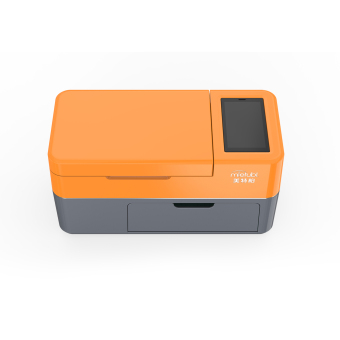
Key decision criteria:
- Test the exact film families, constructions, and suppliers planned for production.
- Include representative phones, tablets, and challenging device shapes within the required operating range.
- Evaluate the complete three-in-one workflow rather than cutting alone.
- Define measurable pass, rework, and reject conditions before testing begins.
- Retain accepted samples as references for delivery inspection and operator training.
Verify Compatibility With Production-Representative Films
The MTB-CUT M688 supports a maximum cutting size of 14.6 inches, or 324.4 × 208.6 mm. Its maximum material width is 235 mm, while the maximum cutting width is 213 mm. Buyers should compare all three limits with their film sheets and device templates; a material may physically feed into the machine while its required cut area still exceeds the supported width.
The supplied M688 information does not name specific compatible film chemistries or constructions. Compatibility should therefore be confirmed with actual stock rather than inferred from dimensions. Test normal inventory as well as reasonable lot variation, especially where liners, adhesives, coatings, or stiffness differ.
Build a Representative Cutting, Applying, and Curing Test
The M688 combines film cutting, application, and UV curing in one machine, so validation should follow the same sequence expected in daily operation. Begin with a model mix covering commonly requested devices, smaller formats, and the largest format the buyer plans to offer. Do not use the rated maximum as evidence that every device below that size will automatically pass.
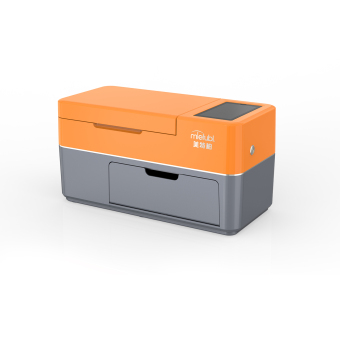
- Cut: Check template selection, orientation, complete separation, edge shape, and critical openings.
- Apply: Inspect alignment, edge placement, trapped contamination, bubbles, lifting, and handling consistency.
- Cure: For materials requiring this stage, run the built-in 395 nm UV system and inspect the completed film after the buyer-defined curing interval.
- Repeat: Use more than one operator and repeat important models to identify whether results remain consistent.
The machine is specified with 0.1 mm cutting accuracy and 1000 g cutting force. These values can guide test planning, but finished-film acceptance should remain the purchasing standard.
Set Output Acceptance Rules Before Testing
Written criteria prevent an attractive demonstration from replacing objective evaluation. Buyers should specify allowable edge deviation, opening alignment, bubbles, lifted corners, incomplete cuts, visible marks, and rework frequency. Acceptance rules may differ by device category or film type, so one universal pass condition may be unsuitable.
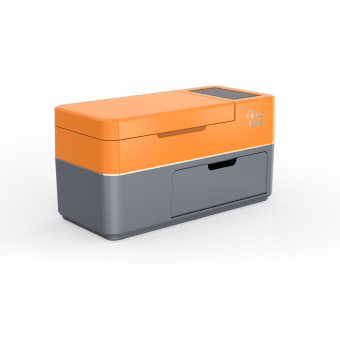
Record the machine settings, material batch, device model, operator, result, and reason for any rejection. Accepted samples should be labeled and retained. This creates a practical reference for comparing future output without turning a technical rating into an unsupported quality guarantee.
Common Questions
Does the 14.6-inch capacity prove that every smaller device is compatible?
No. It establishes the maximum supported cutting size, but buyers should still verify template geometry, usable cutting width, film construction, and completed application quality for each important device group.
Should buyers test only their highest-volume film?
No. The highest-volume material is essential, but testing should also cover meaningful variations in supplier, coating, adhesive, liner, stiffness, or format. Materials that appear similar may require different settings or may produce different application results.
Is a successful cut sufficient for purchase approval?
Not for a three-in-one machine. Approval should cover cutting, application, and UV curing where applicable, followed by inspection of the saleable finished protector. Operator repeatability and rework levels should also be considered.
Conclusion: Buy Against Accepted Samples, Not Specifications Alone
The MTB-CUT M688 may suit buyers seeking an integrated screen-protector workflow, provided their own materials and target devices pass a representative test. The sound procurement decision is to define acceptance rules first, validate the complete process, and use retained approved samples as the output benchmark.
About Mietubl
Mietubl is a Guangzhou-based mobile accessories brand whose name reflects its guiding idea: Make It Easier To Use, Better Life. With roots in the mobile accessories industry dating to 1998 and the MIETUBL brand registered in 2010, the company focuses on products that make everyday digital use simpler and more practical.
Its portfolio includes screen protectors, intelligent screen protector cutting machines, film materials, data cables, chargers, power banks, and audio accessories. By combining design, product development, manufacturing, and channel support, Mietubl works with distributors and retailers serving a broad range of mobile accessory needs, with products exported to more than 120 countries and regions.
For product information, samples, or distribution opportunities, contact Marketing@mietubl.com or visit www.mietubl.com.
Was this article helpful?
Your feedback helps us improve future articles.